
Oasis of Glass, Desert of Brick: The Peckham Experiment’s Radical Vision

In the interwar years in Britain, a crisis of national fitness exposed by the First World War prompted the Fabian Society to propose a centralised, expert-led welfare state to manage the population from the top down. The Peckham Experiment in south-east London offered a defiant alternative, says Jennifer Okerenta.   

(Wikimedia Commons)

The Peckham Experiment was born a rejection of established medical practice by George Scott Williamson and Innes Pearse, two pathologists working at the Royal Free Hospital. Moving away from a narrow focus on the mechanics of disease, they investigated how health manifests when an organism exists in harmony with its environment. For them, health was not a state-dispensed service; it was a spontaneous by-product of a self-organising community. They choose Peckham as a stable, working class district without extremes of poverty for a community-led experiment.

While the Fabians argued public health should be provided by an elite class of state planners and doctors, Williamson and Pearse championed the social principle. They believed that by removing the paternalism of state-managed welfare, they could observe families thriving autonomously. This commitment to self-governance drew them into radical circles, with Williamson frequently speaking for the London Anarchist Group.

Ethology and the “Sight of Action”

The founders’ unorthodoxy was holistic, extending from the family unit to the soil. At a time when medical progress was measured by clinical cures and agriculture pivoted toward industrial chemicals, Williamson and Pearse became key figures in creating the Soil Association, a charity focussed on the effect of agriculture on the environment. Convinced health was impossible without quality nutrition, they established an organic farm at Bromley Common, Kent. This deliberately bypassed the industrial food system to prove human health remained dependent on land fertility.
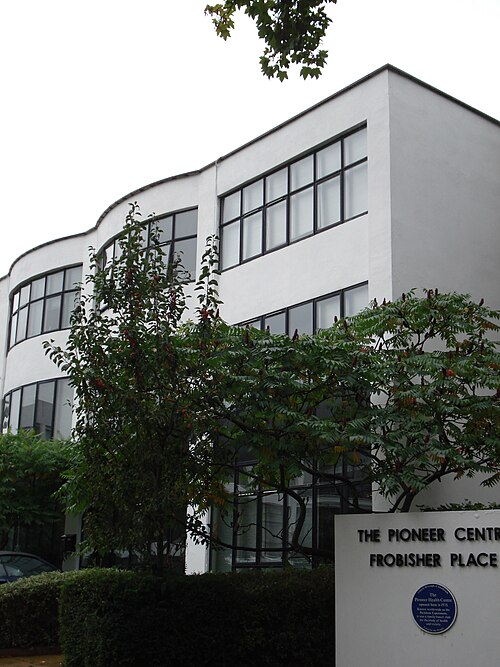
(Wikipedia Peckham Experiment)

The ethological approach—observing behaviour in its natural setting—found physical form in the Pioneer Health Centre in Peckham, a building that Bauhaus director Walter Gropius famously dubbed an “oasis of glass in a desert of brick” in 1935.

Designed by Sir Owen Williams, this open architecture facilitated the “sight of action.” This was the hypothesis that health could be caught by observing others. The glass panels allowed biologists to observe the community without the white coat interference that defined traditional hospitals.

Charging a family subscription fee ensured the Pioneer Health Centre in Peckham remained a member-owned club, where health was nurtured through collective participation rather than top-down charity.

Collision with chemical triumphalism

This insistence on localism caused the experiment to collide with the new National Health Service (NHS) in 1948. Uncompromising critics, Williamson and Pearse famously branded it a “national sickness service.” They argued that the state’s focus on acute cures and chemical triumphalism (relying on new drugs like antibiotics) ignored the environmental roots of health.

The Ministry of Health dismissed the autonomous, fee-paying Centre as an ‘administrative irregularity.’ To a new top-down NHS built on hospital beds and pharmacy counters, a community club centred on a swimming pool simply did not compute as healthcare.

When the Centre closed in 1950, Britain abandoned a radical alternative for public health. Today, as we grapple with the limits of a purely curative system, the experiment’s core finding that health is a mutual synthesis of environment and organism feels strikingly modern. It serves as a reminder that health cannot be dispensed from a pharmacy; it must be nurtured within a community, from the ground up.

Jennifer Okerenta is a fourth-year medical student at the University of Manchester. She is a winner of a 2026 Norah Schuster Prize for her paper on which this blog is based. Her research explores the history of social biology, radical politics and the architecture of preventive medicine.

References and further reading

Armstrong, D., Political Anatomy of the Body: Medical Knowledge in Britain in the Twentieth Century. Cambridge: Cambridge University Press, 1983

Conford, P., ‘Smashed by the National Health’? A Closer Look at the Demise of the Pioneer Health Centre, Peckham. Medical History, 2016, Vol. 60, nr. 2, pp. 250-269

Conford, P., Anarchism and the welfare state: the Peckham Health Centre. History & Policy, 2024

Pearse, I. H. & Crocker, L. H., The Peckham Experiment: A study of the living structure of society. London: Allen & Unwin, 1943. Wellcome Collection.

Williamson, G. S. & Pearse, I. H., Science, Synthesis and Sanity. London: Collins, 1965. Wellcome Collection


Plague Houses and Pandemics – Some comparisons between 1665 and 2020

Charles ll issued an edict in 1665 that every parish should identify a shed, a tent or a house to accommodate those identified with the plague. Alison Wall looks at the role of such isolation in times of pandemic.

19th century lithograph of old plague houses in bleak setting

Pest houses Tothill Fields, Westminster, London, lithograph 1840, Wellcome Collection

Plague, pest or pestilence houses – the terms can be used interchangeably – were buildings set apart as places to isolate those suffering plague and smallpox. It seems that there was often a favourable outcome and people survived.

There were five pest houses in London, accommodating about 600 sufferers, and there are houses still standing across the country, some Grade ll listed.

Was there a degree of restraint for those confined to the pest house? There may well have been if we look at Samuel Pepys’s comments, in his diary of 1665: “A mayde having run away was taken back to the pest house in the pest coach.”

What was the pest coach? It was a special sedan chair painted black, with black curtains, so it was clear what its function was.

Then and now, the most important difference between the 21st and the 17th centuries was the realisation in the 17th century it was wrong to admit plague and smallpox sufferers into the general hospitals or hospitiums, as they were initially called. The latter were there to serve the poor and suffering and give general shelter and care.

Charles II looked back in history and understood the importance of isolation and care in the pest houses. Sadly, our equivalent Nightingale hospitals were erected in a very reactive and uncoordinated fashion. In our time, how many people were admitted into the general hospitals with some acute or chronic condition, unrelated to Covid but caught Covid in hospital and died? Many health professionals also died in the early days of Covid.

Another, if less significant contrast, is that in the time of the Great Plague in 1665, thousands of stray cats and dogs were slaughtered, as people believed they carried dirt and fleas. The cat population could have helped reduce the numbers of black rats that were carrying the plague carrying fleas. Conversely, during the Covid lockdown many people homed cats and dogs for companionship.

The spread of Covid across the world has had a massive impact. The isolation that plague victims must have experienced – and sometimes tried to escape – has echoes in that endured during lockdown in the period of Covid. Isolation causes huge psychological and emotional impacts, with greater understanding of this post Covid.

Inevitably there will be future pandemics. We need to reflect and plan for the future, remembering the value of those parish pest houses.

Alison Wall is a retired nurse, midwife and health visitor. She is the author of “Plague Houses and Pandemics”. Before her retirement she worked in Camden and Islington as a public health strategist.

Woman in pink dress with figure in red cloak and plague masque.

Alison Ward with a figure wearing plague masque

References and further reading

  1. https://www.nationalarchives.gov.uk/education/resources/great-plague/
  2. Byrne, J. Encyclopedia of the Black Death. Bloomsbury. 2024. p.217
  3. https://onlinelibrary.wiley.com/doi/abs/10.1111/nuf.12001
  4. Latham, R.C. & Matthews, W. (ed) 1885. The Diary of Samuel Pepys, Vol. Vl. p.120
  5. Boyd, D. Plagues and Pandemics. Pen and Sword. 2021. p. 67

One-way systems to keep patients separate

Eastern Dispensary, Bath Photo: William Rogers, britishlistedbuildings.co.uk

The Corona virus pandemic prevention measures were not the first one-way system in British health care, as William Evans explains.

One feature of the measures imposed or encouraged by the UK government to stop Corona virus spreading was one-way systems for human traffic. In premises such as doctor’s surgeries, one-way systems aimed to reduce close contact between people and avoid transmission of the virus.

One-way systems are not new. We are familiar with them in the management of road traffic. Although fewer accidents and a reduction in personal injuries are some results, the main aims are to relieve traffic congestion and reduce conflict among road users. Another example comes from the household goods sector. The retailer Ikea makes customers follow a prescribed route through its stores. In this case, the aim is not safety, but more sales by bringing to customers’ attention all the goods offered, not just those the customer may be interested in.

There is a historic precedent for a one-way system in a medical context from the Eastern Dispensary in Cleveland Place East, Bath. Opened in 1845, it was designed by the local architect, Henry Edmund Goodridge (1797-1864). The external design is neo-classical: the entrance at the front through a portico with columns and a pediment. Inside, the design was innovative. On entering, patients were directed into one of two waiting rooms at either side of the building (one for women, one for men?). In each waiting room, the patients sat on, and moved along, benches. The first bench was attached to the left side wall, the next one to the right, and so on.

As a result, patients moved along the benches in queue until they were summoned to rooms at the back of the building where they were seen by an apothecary or surgeon or went into a dressing room. They then left the building by a back door from the room where they were seen or treated.

Plan of the dispensary The Builder, (1849) 160

The purpose of that layout may have had much to do with keeping order in what could otherwise have been a melee, but no doubt it also helped to limit the transmission of infectious or contagious diseases. Goodridge’s radical design was commended by The Builder magazine as a model for future dispensaries. It would be interesting to know whether his Bath layout was followed elsewhere.

After it ceased being used as a dispensary, the building housed various activities: in the 1910s, for example, colleges and pharmacies. It is now a bistro.

References

Plan of the dispensary: Bath & NE Somerset Council Archives, 0033

The Builder, (1849) 160; https://archive.org/details/gri_33125006201806/page/160/mode/2up?view=theater

Michael Forsyth, Bath, in the Pevsner Architectural Guides series, Yale UP 2003

For Goodridge: HM Colvin, A biographical dictionary of British architects 1600-1840, Yale UP 1997

For dispensaries: Michael Whitfield, The dispensaries: healthcare for the poor before the NHS, Author House 2006

William Evans is treasurer of Avon Local History & Archaeology, the umbrella group for local history in the Bristol and Bath area.

Recycling Penicillin from Urine in Post-War Germany

Limited supplies of penicillin and Allied restrictions on German access to the drug in the immediate aftermath of World War II led to its recovery from the urine of treated patients. Susanne Krejsa MacManus explains.

German research on penicillin started only in 1942 and then on a very small scale.[1]  Gerhard Domagk (1895-1964), the German scientist who in 1935 had developed sulfonamides, had advised the Nazi government to concentrate on improving of “his” type of antibiotics instead of trying to get its own penicillin production going.

It took Germany till the end of 1943 to really understand the importance of penicillin, but because of the efforts of the Allies to restrict information and materials,[2] German scientists were not able to learn about the right mould, nor could they develop the process to get a good supply.

From autumn 1945, British and American forces increased the amount of penicillin flown into hospitals in Berlin – mostly for their own soldiers as a treatment for sexually transmitted diseases. But the occupying forces faced a dilemma: on one hand, they had to look after the health of the population of the occupied areas; on the other hand, there was a hostile atmosphere against the German population – at least in the first months after the end of the war. Germany was categorised as a “defeated enemy” – in contrast to Austria which was categorised as a “victim”.

There was even a third aspect. The German pharmaceutical industry was known as being innovative and effective. The occupying forces hoped for “penicillin made in Germany” and encouraged companies like I.G. Farben, Hoechst and Chemie-Grünenthal to start such an undertaking.

The USSR did not have penicillin production of its own, although they claimed two of their scientists had invented the antibiotic long before Alexander Fleming. As early as early May 1945, Soviet forces who were eager to get penicillin as part of German reparations were pushing the German company Schering .[3]

Since one of Schering’s production sites lay in British territory, the company got support from the British element of the occupation forces for building laboratories and getting raw material (as this ad shows.).[4] 

Salzburger Nachrichten, 9/1/1946  Schering AG produces penicillin Berlin,  As the British broadcast has reported, the Germany pharmaceutical company Schering AG in Berlin will manufacture penicillin for Germany. The British military government has promised its support to the company in procuring the laboratory and the necessary material, so far as it is available in Germany.

But sufficient output was not available before the end of 1946/the beginning of 1947.

Two-thirds excreted

During their struggle to set up a production site, scientists at Schering recalled that two- thirds of penicillin given by injection left the body very quickly, so quickly that injections had to be repeated every few hours.[5] “If we could get the urine of patients treated with penicillin”, the scientists speculated, “we might be able to reclaim and concentrate this substance.”

The British and American forces permitted them to collect the urine from their hospitals on the condition that they got their share of the recycled substance. From March 1946, Schering’s scientists organised milk-churns and bicycles and went from hospital to hospital to collect patients’ urine. The recycling process was successful, and in spring 1947 it was extended into American and British areas of West Germany. In April 1949, nearly 5000 liters of urine from 3153 patients were collected from hospitals. This activity lasted till 1950, when the manufacturers’ penicillin production was sufficient to meet demand.

Recycling penicillin from urine was not a new idea, but its use on this scale was was exceptional. It showed that the German researchers had clearly understood the character of penicillin being excreted from the organism so quickly. Secondly, the process of recycling penicillin purified the substance, which at the initial injection had produced sharp and unpleasant feelings for the patient. And third, it shows how Schering’s researchers could act on their own initiative, without having to ask boards and committees for permission as they would have to do today.

Susanne Krejsa MacManus PhD is an independent journalist, author and archivist in Vienna. She is a member of the History of Medicine/Medical Humanities working group of the Commission for History and Philosophy of the Sciences at the Austrian Academy of Sciences (ÖAW).

References

[1] I. Pieroth: Penicillinherstellung – Von den Anfängen bis zur Großproduktion, Heidelberger Schriften, 1992, p. 103.

[2] P. Rostock: Die Wunde, Berlin: De Gruyter, 1950, p. 290.

[3] J.-P. Gaudillière, B. Gausemeier: Molding National Research Systems, OSIRIS 2005, 20:180-202.

[4] Schering A.G. Berlin produziert Penizillin, Salzburger Nachrichten, 9. 1. 1946, p. 2.

[5] J.H. Humphrey: Excretion of Penicillin in Man, Nature 3920, 1944, 765.


Being right is not enough

Scientific debate can be soured by the tendency for evangelical pioneers to see any questioning as opposition bordering on evil.   Their aggressive attitude can delay innovation, a lesson perhaps for our own times and a reason for studying history, says Mike Davidson.  

Ignaz Semmelweis

My wife and I saw the production “Dr Semmelweis” at the Bristol Old Vic. At last, a chance to experience live theatre with a full audience; it also fulfilled my interest in the history of medicine. The writers, Mark Rylance and Stephen Brown, were influenced by the 1952 biography Semmelweis (1818-1865) by Louis-Ferdinand Céline, a work I am unfamiliar with.

Their play is a dramatic interpretation of the work of Ignaz Semmelweis (1818–1865) on puerperal sepsis and his failure to convince his contemporaries of the need for ward hygiene to control the disease. This was in no small part a result of his uncompromising personality and ability to alienate even his strongest supporters and allies.

Semmelweis proposed the practice of washing hands with chlorinated lime solutions in 1847 while working in Vienna General Hospital’s First Obstetrical Clinic, where doctors’ wards had three times the mortality of midwives’ wards. His observations brought him into conflict with many within the contemporary scientific and medical establishment.

The play records Semmelweis’s descent into madness, haunted by the ghosts of the women he has not saved. The ghosts are portrayed as dancers and musicians on stage and within the audience, as he recollects events. Much of the narrative takes the form of flashbacks acted out for his wife. The opportunities for engagement squandered by Semmelweis due to his lack of understanding of human nature are highlighted.

Rylance’s performance as Semmelweis was central and powerful and the cast provided strong support. I found two female performances poignant, Thalissa Teixeira, as his wife Maria, and Jackie Clune, as nurse Muller. The female characters provide a more balanced view of history than concentrating on male pioneers.

Muller is a senior midwife who helps Semmelweis with his introduction of hygiene methods and provides clinical data to support his thesis. His lack of empathy for her guilt in accidentally causing an outbreak of sepsis that contributed to her ultimate suicide speaks volumes of the single-mindedness and unforgiving attitude of Semmelweis.

There is a very pertinent observation by Rylance in an interview published in the Financial Times on 12 January 2022: “He wasn’t just a victim. He was also a very difficult person: someone who got very angry about people not understanding him and became his own worst enemy. Which maybe a lot of pioneers are — they’re people who cut through and are not the most polite or politically savvy people.”

The production at Bristol has now ended but given the enthusiastic reception it got there, it may be staged again.

I recommend the play not only for a medical history enthusiast but for anyone who wants to experience a thought-provoking performance by a talented cast, playwrights, dancers and musicians.

Mike Davidson is President of the British Society for the History of Medicine.