How deadly was smallpox? Rethinking a familiar statistic

A familiar figure appears repeatedly in textbooks and scholarship alike: that smallpox killed 20–30 percent of those infected. It is a striking statistic—but how reliable is it? Eric Schneider and Romola Davenport have revisited this question.

In 1707, as smallpox spread across Iceland, one observer described a haunting scene: farms stood silent, livestock wandered unattended, and “the healthy could not tend to the sick.” Entire households had fallen ill at once. Some who might have survived, he wrote, died simply because no one was left to care for them. All told some 25% of the population of Iceland died from smallpox in this epidemic. This epidemic shows that smallpox could be very lethal, but was this typical?

In our latest research, we examine smallpox case fatality rates in two eighteenth-century case studies: Iceland in 1707–09 and Sweden in 1776–1800. This allows us to understand how the lethality of smallpox varied in different epidemiological contexts, before the impact of vaccination.

A disease of childhood

In Sweden and many other parts of Europe before vaccination, smallpox was endemic. In such settings, it circulated continuously and was primarily a disease of childhood. By adulthood, most individuals had already been infected and acquired lifelong immunity.

Using detailed mortality data from Sweden between 1776 and 1800, we show that adult deaths from smallpox were extremely rare. This observation creates a puzzle. Given the number of reported smallpox deaths, if smallpox really killed 20–30 percent of those infected, a large proportion of the population should have remained susceptible into adulthood, but they did not.

By modelling mortality and immunity together, we estimate that the most plausible case fatality rate in this endemic context was much lower: around 8–10 percent. A very different picture emerges when smallpox struck as an epidemic disease.

When epidemics overwhelm society

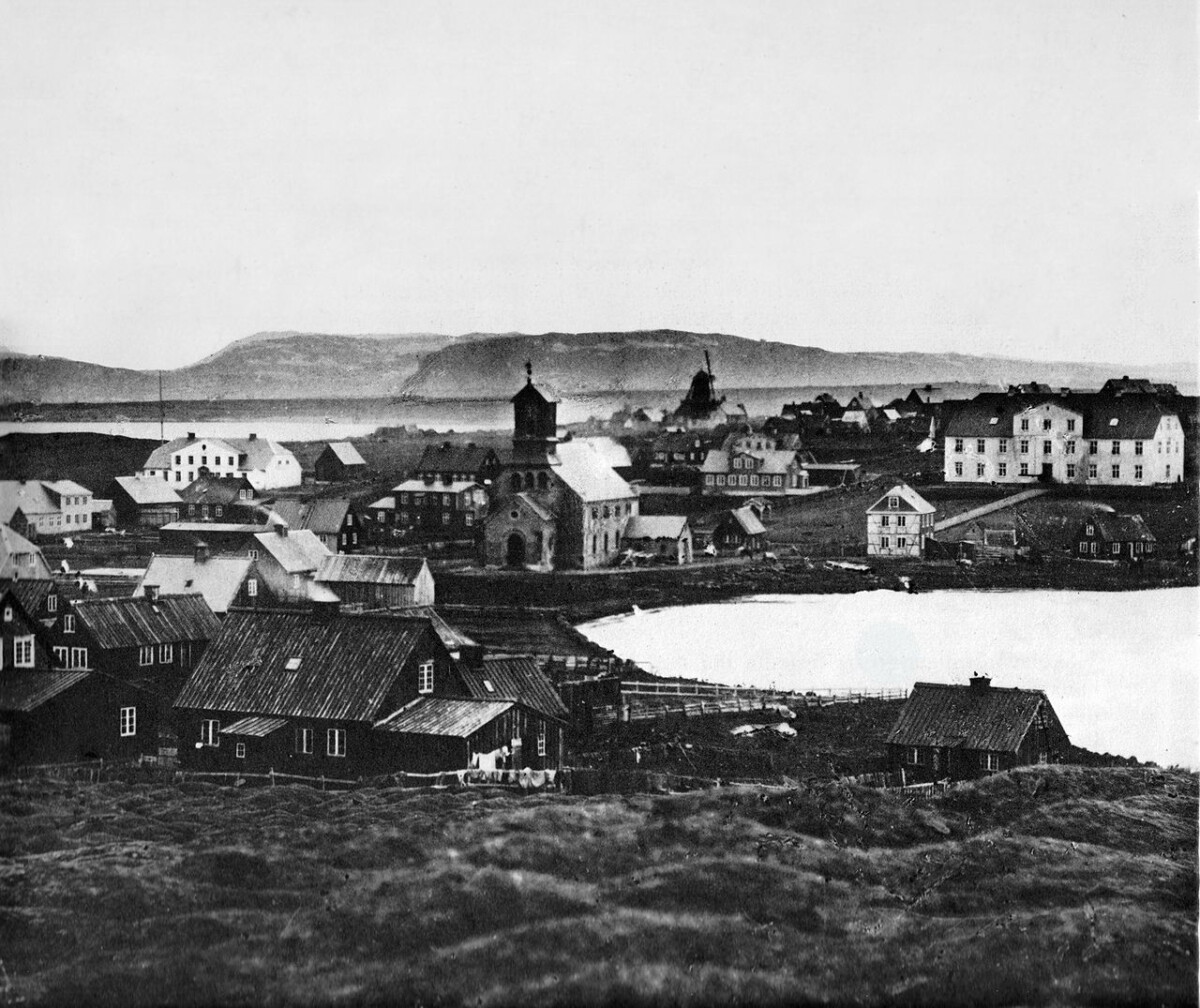
The photo shows how sparse the population of Iceland was even in the capital city Reykjavik in the 1860s. (Sigfús Eymundsson 1837 – 1911, via Wikimedia Commons)

In Iceland, where the population was too small to sustain endemic transmission, outbreaks occurred only intermittently. When they did, they affected both children and adults. The epidemic of 1707–09 was particularly devastating, killing over a quarter of the population. By combining census and mortality data with estimates of infection rates, we calculate that the case fatality rate in this epidemic may have been as high as 43–55 percent.

Such figures are far above the familiar 20–30 percent. But they are not easily explained by biology alone. For historians of medicine, the most revealing aspect of our work lies in its emphasis on care. In endemic settings, infections were spread out over time. Households continued to function, and the sick could be nursed. In Iceland, by contrast, entire households fell ill at once. There were too few healthy people to care for the sick, prepare food or even tend livestock. Under these conditions, mortality rose sharply, not simply because the disease was virulent, but because the social systems that sustained life had broken down.

Beyond a single number

These findings challenge the idea that diseases have fixed case fatality rates that can be applied across time and place. Instead, they highlight the importance of context, especially the organisation of households, the availability of care and the scale of outbreaks.

They also have wider implications. High mortality in past smallpox epidemics, including those in the Americas, may reflect not only immunological vulnerability but also the social disruption caused by widespread infection.

Smallpox, in this light, was not simply a biological phenomenon. Its deadliness depended on the societies it struck. For historians, this serves as a reminder that disease outcomes are shaped as much by social conditions as by pathogens themselves.

Eric Schneider is Professor of Economic History at the LSE. His research focuses on the history of child health and the causes of the health transition. https://www.ericbschneider.com/

Romola Davenport is a research professor in the Cambridge Group for the History of Population and Social Structure, University of Cambridge. Her research addresses the demographic impacts of early public health interventions. https://www.geog.cam.ac.uk/people/davenport/

Their open-access paper is available at Schneider, E. B., & Davenport, R. J. (2026). What is the case fatality rate of smallpox? Population Studies, (ahead-of-print), 1–15. https://doi.org/10.1080/00324728.2026.2620692

Emil Kraepelin, the little known guru of British psychiatry

Emil Kraepelin (1856-1926) is one of the psychiatrists who have shaped world psychiatry. His views have had more lasting influence on psychiatry than Freud, yet he is little known by the public, explains Peter Carpenter. 

Kraepelin arguably is the most significant figure in the development of the ideas of British psychiatry. The impending centenary of his death has prompted a two-day conference at the Royal Society of Medicine in London: After Kraepelin: Ambitions, Images, Practices and the History of Psychiatry 1926-2026 on 6-7 March.

Bearded older man in oval format

Emil Kraepelin

His comparative obscurity is probably because he was a German by birth, spent his entire life within Germany and wrote in German. He left others to translate. But he wrote at a time when British psychiatry was looking for evidence to develop the profession. His great work Compendium der Psychiatrie: Zum Gebrauche für Studirende und Aerzte (Compendium of Psychiatry: For the Use of Students and Physicians) was first printed in 1883, and he wrote nine editions of the work during his life.

He first stressed the biological basis of mental illness and the need to collect observations over time. He started the advance from concepts of mental illness from classifications that still depended on 18th century and earlier ideas that named mental conditions by how they presented in the here and now. A patient, therefore, could have series of names given to their condition over a period of ill-health. As part of this, in his 1893 edition he separated major affective disorders – mania and melancholia – from dementia praecox (later called schizophrenia) – rather than grouping them on whether they were violent or inactive when seen.

With his detailed case records and search for physical causes, Kraepelin turned psychiatry and the treatment of mental illness from a philosophical argument into a science and psychiatrists from quacks to doctors. His ideas were practically useful to psychiatrists dealing with major mental illness, and whilst Freud later held the public’s imagination, Kraepelin (and his views of the biological basis of major mental illness) continued and determined much of modern psychiatric thinking and treatment.

Kraepelin actively rejected the ideas of Freud on childhood experiences being a cause of illness. He studied speech in dreams as a means of understanding psychotic speech. He campaigned for better treatment of the mentally ill but also supported the ideas of eugenicists and taught that homosexuality was a vice.

The conference After Kraepelin: Ambitions, images, Practices and the History of Psychiatry 1926-2026 has a programme that covers both his history and his ideas and how biological research and social and political changes have altered how his ideas are now seen. It will take place on 6-7 March and is open to all. Further details: https://www.rsm.ac.uk/events/psychiatry/2024-25/pyt02/.

Peter Carpenter is a retired psychiatrist, now co-chair of the history of psychiatry group in the Royal College of Psychiatrists and a fellow of the RSM.

Plague Houses and Pandemics – Some comparisons between 1665 and 2020

Charles ll issued an edict in 1665 that every parish should identify a shed, a tent or a house to accommodate those identified with the plague. Alison Wall looks at the role of such isolation in times of pandemic.

19th century lithograph of old plague houses in bleak setting

Pest houses Tothill Fields, Westminster, London, lithograph 1840, Wellcome Collection

Plague, pest or pestilence houses – the terms can be used interchangeably – were buildings set apart as places to isolate those suffering plague and smallpox. It seems that there was often a favourable outcome and people survived.

There were five pest houses in London, accommodating about 600 sufferers, and there are houses still standing across the country, some Grade ll listed.

Was there a degree of restraint for those confined to the pest house? There may well have been if we look at Samuel Pepys’s comments, in his diary of 1665: “A mayde having run away was taken back to the pest house in the pest coach.”

What was the pest coach? It was a special sedan chair painted black, with black curtains, so it was clear what its function was.

Then and now, the most important difference between the 21st and the 17th centuries was the realisation in the 17th century it was wrong to admit plague and smallpox sufferers into the general hospitals or hospitiums, as they were initially called. The latter were there to serve the poor and suffering and give general shelter and care.

Charles II looked back in history and understood the importance of isolation and care in the pest houses. Sadly, our equivalent Nightingale hospitals were erected in a very reactive and uncoordinated fashion. In our time, how many people were admitted into the general hospitals with some acute or chronic condition, unrelated to Covid but caught Covid in hospital and died? Many health professionals also died in the early days of Covid.

Another, if less significant contrast, is that in the time of the Great Plague in 1665, thousands of stray cats and dogs were slaughtered, as people believed they carried dirt and fleas. The cat population could have helped reduce the numbers of black rats that were carrying the plague carrying fleas. Conversely, during the Covid lockdown many people homed cats and dogs for companionship.

The spread of Covid across the world has had a massive impact. The isolation that plague victims must have experienced – and sometimes tried to escape – has echoes in that endured during lockdown in the period of Covid. Isolation causes huge psychological and emotional impacts, with greater understanding of this post Covid.

Inevitably there will be future pandemics. We need to reflect and plan for the future, remembering the value of those parish pest houses.

Alison Wall is a retired nurse, midwife and health visitor. She is the author of “Plague Houses and Pandemics”. Before her retirement she worked in Camden and Islington as a public health strategist.

Woman in pink dress with figure in red cloak and plague masque.

Alison Ward with a figure wearing plague masque

References and further reading

  1. https://www.nationalarchives.gov.uk/education/resources/great-plague/
  2. Byrne, J. Encyclopedia of the Black Death. Bloomsbury. 2024. p.217
  3. https://onlinelibrary.wiley.com/doi/abs/10.1111/nuf.12001
  4. Latham, R.C. & Matthews, W. (ed) 1885. The Diary of Samuel Pepys, Vol. Vl. p.120
  5. Boyd, D. Plagues and Pandemics. Pen and Sword. 2021. p. 67

The Bulletin: A meaning making mechanism for British polio disabled people

Polio is highly culturally evocative – vaccines on sugar lumps, children in callipers and lifetimes in iron-lung respirators. The Bulletin, published by The British Polio Fellowship, provides an additional perspective. It gives an insight into how polio-disabled people understood and wished to represent themselves. Charlotte Stobart explains.

In 1939, Patricia Carey, who contracted polio in India as a child, and Frederic Morena, a stage actor who contracted polio at 42 and was subsequently wheelchair bound, founded the Infantile Paralysis Fellowship as an advocacy and self-help society.

This organisation, which became the British Polio Fellowship, initially attempted to address both the physical and social limitations of polio-disability, focusing on mutual support and personal development.  From its inception, the Fellowship published a bimonthly newsletter for members.

The first major British polio epidemic came in 1947, and outbreaks of polio (nicknamed the ‘summer scourge’) occurred regularly until the 1956 advent of the Salk Vaccine. The number of cases came down, but the disease left many people with lifelong disabilities. Many developed post-polio syndrome, sometimes as much as 40 years after the original infection.

Young men with polio disability are part of a regional water polo team

A regional water polo team. Young men with characteristic polio-disability. The Bulletin, May 1969, p. 8, The British Polio Fellowship Archive

By 1965, the fellowship had around 12,000 members to whom it circulated the newsletter, called the Bulletin. This was a bottom-up, collective project, and the polio-disabled readership provided the bulk of copy and photographs (including of sports days, holidays and weddings). Similarly, patients at the Spinal Injuries Unit at Stoke Mandeville Hospital in Buckinghamshire, wrote and edited their own community building publication, The Cord, from 1947.

Active and positive

The Bulletin consciously and consistently portrayed polio-disabled people enjoying a range of experiences, triumphing over polio and over societal assumptions about the limitations of disabled people. It challenged dominant sociocultural narratives of loss and trauma, and provided polio-disabled people with representational agency and a positive sense of identity and community.

The iconic ‘Action for the Crippled Child’ charity collection boxes of the 1960s showed a young boy with his crutches and callipers. He is despondent, evoking charitable pity (and hopefully, donations). Conversely, editions of The Bulletin from the 1960s used pictures of a group of young men on crutches playing football, a team of water polo players with characteristic signs of polio paralysis in their asymmetric legs and a man in a wheelchair being lifted (somewhat inexplicably) by crane onto a ship.

Through the 1960s, understandings of polio shifted as the public health threat waned. As their numbers and cultural purchase naturally decreased, polio-disabled people were increasingly overlooked by mass-media, and polio itself became increasingly regarded as a phenomenon of the past or other global regions.

Thanks in no small part to the work of the British Polio Fellowship and The Bulletin, the polio-disabled identity developed positive connotations: determination, hard-work and tenacity. The Bulletin allowed British polio-disabled people to continue to assert their presence and identity and raise funds for assistive technologies, activities and residential homes for their ageing cohort. The British Polio Fellowship continues to publish The Bulletin to this day, advocating for the 47,000 people in Britian still living with the late effects of polio.

Charlotte Stobart is an MA student of History of Technology, Science, and Medicine at the University of Manchester.

References and further reading

The British Polio Fellowship: https://www.britishpolio.org.uk/

The Bulletin Archive- stored at the British Polio Fellowship Office in CP House, Otterspool Way, Watford WD25 8HR.

Brady, Sam, The Cord, https://www.paralympicheritage.org.uk/blog/the-cord-journal-for-paraplegics, National Paralympic Heritage Trust, 20 July, 2020.

Couser, Thomas, “Disability, Life Narrative, and Representation.” PMLA 120:2 (2005): 602–6

Williams, Gareth, Paralysed with Fear: The Story of Polio. London: Palgrave MacMillan, 2013


Electricity and Pancakes

Adrian Thomas describes how the poet William Cowper used electricity to treat a friend who suffered a stroke.

I had a significant birthday recently, and as a birthday treat, we decided to visit Olney in Buckinghamshire where the poet William Cowper (1731-1800)  lived. In his day Cowper was arguably the most popular and influential poet in the English language with his poems celebrating the countryside and ordinary life. He was also committed to the abolition of slavery writing The Negro’s Complaint, which was much admired by US civil rights leader Martin Luther King Jr. (1929-1968).

18th century man in formal dress with head covering

William Cowper (1731-1800), Published by Vernor & Hood, Poultry, 1 February 1801. (author’s collection)

We stayed at the excellent Bull Hotel in Olney where Cowper went in 1771 after his maid Molly contracted smallpox, and he was forced to leave his house. The fascinating Cowper & Newton Museum is located in the centre of Olney, and an electrical machine that Cowper used is displayed.  Opposite the museum is the excellent Olney Pancake Parlour, and Olney has its world famous pancake race.

Although he had considerable personal problems, Cowper was immensely creative. He lived in Olney for many years with his friend Mary Unwin (1724–1796). In 1791, Mary had a minor stroke, with a second stroke in 1792. ‘Her speech has been almost unintelligible from the moment when she was struck’ and ‘the use of her right hand and arm, she has entirely lost them’, Cowper wrote in a letter of 24 May 1792 to his cousin ‘my Dearest Coz’  Harriett Cowper (Lady Hesketh).

18th century machine for generating electricity

William Cowper’s electrical machine at the Cowper & Newton Museum in Olney. (author’s photograph)

Cowper’s biographer William Hayley (1745-1820) had installed an electrical machine near Cowper, and the Oxford physician William Austin (1754-1793) had recommended its use. In the same letter, Cowper said that he had borrowed and used the machine on Mary’s paralysed arm ‘and we think that it has been of material service.’ By 3 June, Mary was improving, and Cowper reported to Hayley that she had ‘a better opinion of your spark eliciting faculties than of mine.’ Cowper noted on 4 June that he was ‘thankful that in so small a village as this that I should be able to furnish myself with a complete electrical apparatus.’

Mary made some recovery from her stroke following Cowper’s treatments, and in a letter of 28 June, Cowper describes the continuation of the treatment, believing that the treatments were responsible for the improvement. Mary lived for another four years.

Classic works

The classic book on electrotherapy is the 1855 De l’Électrisation localisée et de son application à la physiologie, à la pathologie et à la thérapeutique (Localised use of electricity in physiology, disease and therapy) by Guillaume Duchenne de Boulogne (1806-1875), who promoted the science of electrophysiology. Duchenne illustrated the electrical treatment of muscles and recorded the changes following the electrical stimulation of paralytic muscular atrophy.

Cowper knew a local apothecary, who gave him a book by the Italian physicist, Tiberius Cavallo(s) (1749-1809), who ‘recommends gentle sparks and the fluid breathed from a wooden point, much rather than smarter sparks or shocks.’

Nineteenth century black & white line drawing of treatment using an electrical machine.

Electrical treatment using an electrical machine, from De l’Électrisation localisée (1855)

Paralysed and atrophic muscles may look more normal following electrical treatments; functional improvements are less likely to occur. However, the relationship between electricity and the body is complex, and previous generations, including Cowper and his group, were very impressed by the effects of electrotherapy.

During the 20th century, electrotherapy gradually passed out of use. Many of the conditions formerly treated with electricity were seen as psychological with a functional component. However, we can ask – should the use of electrotherapy in selected conditions be reconsidered since it was certainly effective in many conditions?

Adrian Thomas is a Visiting Professor at Canterbury Christ Church University where he teaches clinical reporting to radiographers, and he has a deep interest in the history of the radiological sciences. 

Further reading:

The definitive edition of Cowper’s letters is:  The Letters and Prose Writings of William Cowper: Volumes 1-4, 2011, Oxford University Press, edited by James King and Charles Ryskamp.

The classic history of electrotherapy is Colwell, A.A. (1922) An Essay on the History of Electrotherapy and Diagnosis. William Heinemann, London.

A good recent study of Victorian electricity is: Morus, I.R. 2011. Shocking Bodies. Life, Death & Electricity in Victorian England. Stroud: The History Press.