
Oasis of Glass, Desert of Brick: The Peckham Experiment’s Radical Vision

In the interwar years in Britain, a crisis of national fitness exposed by the First World War prompted the Fabian Society to propose a centralised, expert-led welfare state to manage the population from the top down. The Peckham Experiment in south-east London offered a defiant alternative, says Jennifer Okerenta.   

(Wikimedia Commons)

The Peckham Experiment was born a rejection of established medical practice by George Scott Williamson and Innes Pearse, two pathologists working at the Royal Free Hospital. Moving away from a narrow focus on the mechanics of disease, they investigated how health manifests when an organism exists in harmony with its environment. For them, health was not a state-dispensed service; it was a spontaneous by-product of a self-organising community. They choose Peckham as a stable, working class district without extremes of poverty for a community-led experiment.

While the Fabians argued public health should be provided by an elite class of state planners and doctors, Williamson and Pearse championed the social principle. They believed that by removing the paternalism of state-managed welfare, they could observe families thriving autonomously. This commitment to self-governance drew them into radical circles, with Williamson frequently speaking for the London Anarchist Group.

Ethology and the “Sight of Action”

The founders’ unorthodoxy was holistic, extending from the family unit to the soil. At a time when medical progress was measured by clinical cures and agriculture pivoted toward industrial chemicals, Williamson and Pearse became key figures in creating the Soil Association, a charity focussed on the effect of agriculture on the environment. Convinced health was impossible without quality nutrition, they established an organic farm at Bromley Common, Kent. This deliberately bypassed the industrial food system to prove human health remained dependent on land fertility.

(Wikipedia Peckham Experiment)

The ethological approach—observing behaviour in its natural setting—found physical form in the Pioneer Health Centre in Peckham, a building that Bauhaus director Walter Gropius famously dubbed an “oasis of glass in a desert of brick” in 1935.

Designed by Sir Owen Williams, this open architecture facilitated the “sight of action.” This was the hypothesis that health could be caught by observing others. The glass panels allowed biologists to observe the community without the white coat interference that defined traditional hospitals.

Charging a family subscription fee ensured the Pioneer Health Centre in Peckham remained a member-owned club, where health was nurtured through collective participation rather than top-down charity.

Collision with chemical triumphalism

This insistence on localism caused the experiment to collide with the new National Health Service (NHS) in 1948. Uncompromising critics, Williamson and Pearse famously branded it a “national sickness service.” They argued that the state’s focus on acute cures and chemical triumphalism (relying on new drugs like antibiotics) ignored the environmental roots of health.

The Ministry of Health dismissed the autonomous, fee-paying Centre as an ‘administrative irregularity.’ To a new top-down NHS built on hospital beds and pharmacy counters, a community club centred on a swimming pool simply did not compute as healthcare.

When the Centre closed in 1950, Britain abandoned a radical alternative for public health. Today, as we grapple with the limits of a purely curative system, the experiment’s core finding that health is a mutual synthesis of environment and organism feels strikingly modern. It serves as a reminder that health cannot be dispensed from a pharmacy; it must be nurtured within a community, from the ground up.

Jennifer Okerenta is a fourth-year medical student at the University of Manchester. She is a winner of a 2026 Norah Schuster Prize for her paper on which this blog is based. Her research explores the history of social biology, radical politics and the architecture of preventive medicine.

References and further reading

Armstrong, D., Political Anatomy of the Body: Medical Knowledge in Britain in the Twentieth Century. Cambridge: Cambridge University Press, 1983

Conford, P., ‘Smashed by the National Health’? A Closer Look at the Demise of the Pioneer Health Centre, Peckham. Medical History, 2016, Vol. 60, nr. 2, pp. 250-269

Conford, P., Anarchism and the welfare state: the Peckham Health Centre. History & Policy, 2024

Pearse, I. H. & Crocker, L. H., The Peckham Experiment: A study of the living structure of society. London: Allen & Unwin, 1943. Wellcome Collection.

Williamson, G. S. & Pearse, I. H., Science, Synthesis and Sanity. London: Collins, 1965. Wellcome Collection
 

How deadly was smallpox? Rethinking a familiar statistic

A familiar figure appears repeatedly in textbooks and scholarship alike: that smallpox killed 20–30 percent of those infected. It is a striking statistic—but how reliable is it? Eric Schneider and Romola Davenport have revisited this question.

In 1707, as smallpox spread across Iceland, one observer described a haunting scene: farms stood silent, livestock wandered unattended, and “the healthy could not tend to the sick.” Entire households had fallen ill at once. Some who might have survived, he wrote, died simply because no one was left to care for them. All told some 25% of the population of Iceland died from smallpox in this epidemic. This epidemic shows that smallpox could be very lethal, but was this typical?

In our latest research, we examine smallpox case fatality rates in two eighteenth-century case studies: Iceland in 1707–09 and Sweden in 1776–1800. This allows us to understand how the lethality of smallpox varied in different epidemiological contexts, before the impact of vaccination.

A disease of childhood

In Sweden and many other parts of Europe before vaccination, smallpox was endemic. In such settings, it circulated continuously and was primarily a disease of childhood. By adulthood, most individuals had already been infected and acquired lifelong immunity.

Using detailed mortality data from Sweden between 1776 and 1800, we show that adult deaths from smallpox were extremely rare. This observation creates a puzzle. Given the number of reported smallpox deaths, if smallpox really killed 20–30 percent of those infected, a large proportion of the population should have remained susceptible into adulthood, but they did not.

By modelling mortality and immunity together, we estimate that the most plausible case fatality rate in this endemic context was much lower: around 8–10 percent. A very different picture emerges when smallpox struck as an epidemic disease.

When epidemics overwhelm society

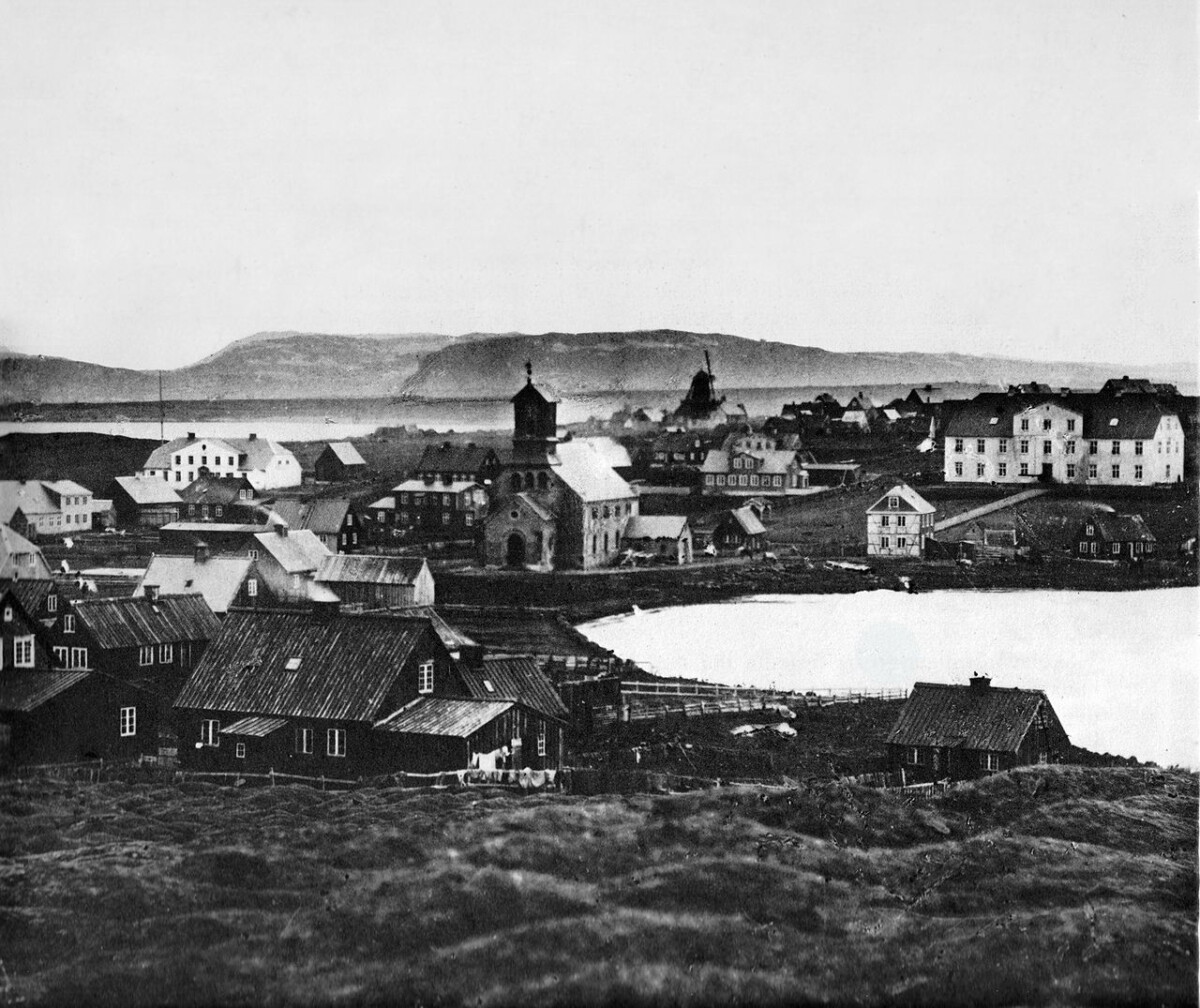
The photo shows how sparse the population of Iceland was even in the capital city Reykjavik in the 1860s. (Sigfús Eymundsson 1837 – 1911, via Wikimedia Commons)

In Iceland, where the population was too small to sustain endemic transmission, outbreaks occurred only intermittently. When they did, they affected both children and adults. The epidemic of 1707–09 was particularly devastating, killing over a quarter of the population. By combining census and mortality data with estimates of infection rates, we calculate that the case fatality rate in this epidemic may have been as high as 43–55 percent.

Such figures are far above the familiar 20–30 percent. But they are not easily explained by biology alone. For historians of medicine, the most revealing aspect of our work lies in its emphasis on care. In endemic settings, infections were spread out over time. Households continued to function, and the sick could be nursed. In Iceland, by contrast, entire households fell ill at once. There were too few healthy people to care for the sick, prepare food or even tend livestock. Under these conditions, mortality rose sharply, not simply because the disease was virulent, but because the social systems that sustained life had broken down.

Beyond a single number

These findings challenge the idea that diseases have fixed case fatality rates that can be applied across time and place. Instead, they highlight the importance of context, especially the organisation of households, the availability of care and the scale of outbreaks.

They also have wider implications. High mortality in past smallpox epidemics, including those in the Americas, may reflect not only immunological vulnerability but also the social disruption caused by widespread infection.

Smallpox, in this light, was not simply a biological phenomenon. Its deadliness depended on the societies it struck. For historians, this serves as a reminder that disease outcomes are shaped as much by social conditions as by pathogens themselves.

Eric Schneider is Professor of Economic History at the LSE. His research focuses on the history of child health and the causes of the health transition. https://www.ericbschneider.com/

Romola Davenport is a research professor in the Cambridge Group for the History of Population and Social Structure, University of Cambridge. Her research addresses the demographic impacts of early public health interventions. https://www.geog.cam.ac.uk/people/davenport/

Their open-access paper is available at Schneider, E. B., & Davenport, R. J. (2026). What is the case fatality rate of smallpox? Population Studies, (ahead-of-print), 1–15. https://doi.org/10.1080/00324728.2026.2620692