The Sacra Infermeria or Holy Infirmary of Malta

Founded in 1299, Malta’s Santo Spirito Hospital was more than 200 years old when the Knights Hospitaliers arrived on the island and decided a new hospital was needed. Arpan Banerjee tells the story of a hospital ahead of its time.

The Knights Hospitalier were a proud military order of the Catholic Church founded in the 11th century to fight as a military force  in the Crusades and also take care of the sick. After the fall of Jerusalem, they eventually migrated to Malta in 1530 where they stayed and ruled the islands until 1798 when they were defeated by Napoleon Bonaparte.
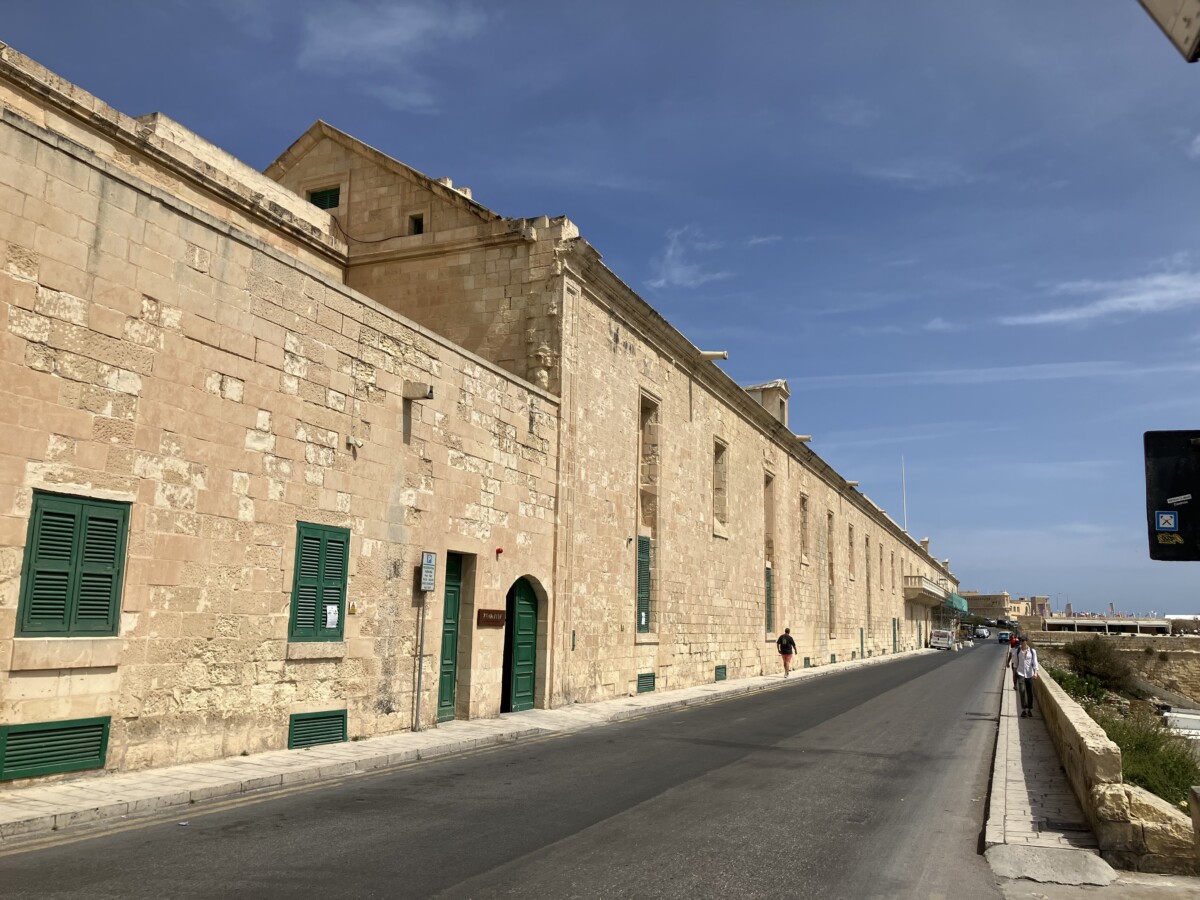
Sacra Infermeria today: author’s photo

At the time of their arrival, Santo Spirito Hospital was the country’s main hospital, but it was outside Rabat, some distance from Valletta. The Knights Hospitaliers felt a hospital was required in Valletta, now the capital of Malta, and in 1574 they built the Sacra Infermeria or Holy Infirmary, at the northern tip of the small promontory of land surrounded by the Grand Harbour. It became one of the leading hospitals in Europe.

A modern hospital

The Sacra Infermeria Hospital had around 500 beds, but could expand to accommodate almost 900 patients if needed. Although not called such then, the Nightingale-style wards included one of the largest halls of its time. The Old Ward, as it was known, was more than 150 metres long. A small ward served the dying. In the basement was a 100-bedded ward for wounded or sick soldiers and sailors. The hospital treated not only the sick but also provided accommodation to those on pilgrimage to the Holy Land. What made the hospital unique, however, were the facilities, the most modern of the time, and high standards of care long before Florence Nightingale made known the importance of nursing.

In the seventeenth century, the hospital boasted a school of anatomy and surgery founded by the Grand Master Cotoner. Cadaveric dissection took place, which did not become a routine part of medical training until the eighteenth century and beyond in Britain. In addition, Sacra Infermeria had a wing for patients with infectious diseases and a ward for the mentally ill patients.
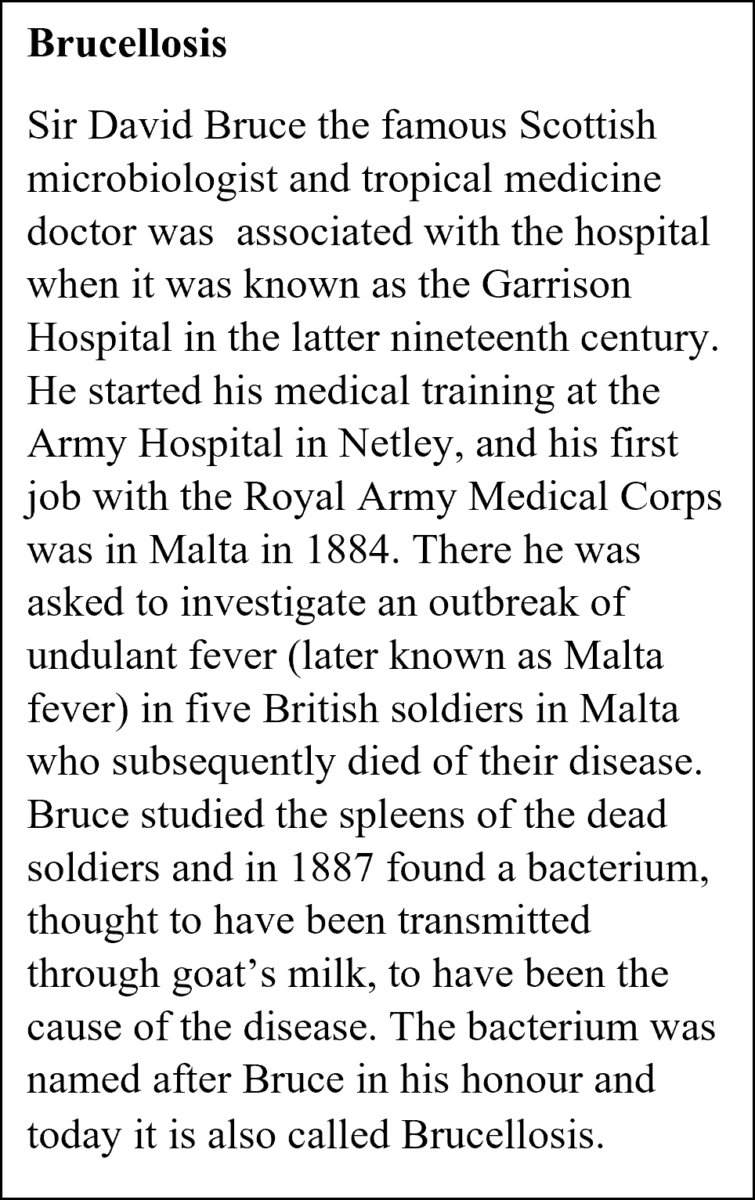
After the brief rule of Malta by the French, the British took over in 1800, and the hospital became an important base for wounded soldiers, as well as the local sick. It played an important role in the Crimean War and First World War due to its strategic position in the Mediterranean, south of Sicily, and known as the Station Hospital.

The Great Ward of the Station Hospital, Malta c 1906, public domain

The hospital was decommissioned in 1918 after WW1 ended. In WW2, the hospital building survived partial bombing, and after the war it served briefly  as a base for the Allied troops based in Malta. The Maltese police then took over the site. A new general hospital was commissioned in Malta in the 1920s, St Luke’s Hospital outside Valletta, and this was replaced by the current teaching hospital Mater Dei in 2007.

Today the old building of the Sacra Infermeria has been renovated internally and converted into a conference centre. The Great Hall  survives and is a reminder of the hospital’s illustrious past and important place in medical history. The Knights of St John no longer rule Malta but exist as the Sovereign Military Order of Malta (SMOM) and perform a global humanitarian role and charitable work . The St John Ambulance that operates in Malta is a direct legacy of this order.

Dr Arpan Banerjee is a retired consultant radiologist from Birmingham. He is currently the Chairman of the International Society for the History of Radiology and a past Chairman of the British Society for the History of Radiology. His latest book project was co-editing and contributing to the Pioneers in Radiology Worldwide at the time of Wilhelm Conrad Röntgen.

References

https://en.wikipedia.org/wiki/Mediterranean_Conference_Centre

Mediterranean Conference Centre

https://whc.unesco.org/en/list/131/  City of Valletta

Major-General Sir David Bruce, K.C.B., F.R.S. Nature 129, 84–86 (1932). https://doi.org/10.1038/129084a0


How a pregnancy test saved the lives of a family in Nazi times

Susanne Krejsa MacManus explains how pregnancy testing saved the life of a refugee woman biochemist and her family in the run-up to World War II.

In the 1930s, the Institute of Animal Genetics at Edinburgh University was the only UK laboratory that ran pregnancy tests. Although the Aschheim-Zondek method invented in Berlin in the late 1920s had been seen as a great step forward, the result took more than 100 hours. It also required testing on female mice. No wonder that the scientific community was excited by a new method that took four hours.

Austrian biochemist Regina Kapeller-Adler had developed a method for detecting the amino acid histidine in the urine of pregnant women in 1933. As the Vienna Daily reported on 30 May 1933 under the heading “Eine neue Schwangerschafts-Reaktion” (a new pregnancy test): “The great advantage of this new chemical pregnancy test lies in the fact that it can be carried out in four hours, whereas the tool that has been most ideal for early diagnostics up until now […] requires a hundred hours until it can be read.”

The second advantage was that it employed a chemical instead of a biological reaction, and no mice had to be killed.

After Hitler occupied Austria (Anschluss) in March 1938, Regina, her medical doctor husband Ernst Adler and their young daughter Liselotte were in severe danger because they were Jewish. The Nazis persecuted Ernst Adler, and he escaped deportation to the Dachau concentration camp only at the very last moment. Regina lost her post at the Institute of Medical Chemistry at the University of Vienna; before that, she had also not been able to get her postdoctoral qualification – as a woman and a Jew.

When Francis Crew, Professor of Genetics at Edinburgh University, learned about the danger Regina and her family were in, he offered her a job in his laboratory, with support of The Society for the Protection of Science and Learning (formed in 1933 in help refugee scientists and other academics).

There was still a problem to be solved: Britain only permitted entry for foreigners if there was a mandatory “guarantor” to vouch for them. Fortunately, Napoleon and Henrietta Ryder deposited the considerable amount of £50 for the Adler family whom they did not know personally, and little is known about this couple. Regina together with husband and daughter could leave Austria, even taking their furniture and his medical equipment with them.

In Britain

In January 1939, they reached London and journeyed on to Edinburgh. Within two months of their arrival in Scotland, she was demonstrating her pregnancy test at the Eleventh British Congress of Obstetrics and Gynaecology. After the German invasion of Norway in 1940, most female foreign citizens were ordered to leave the east coast of Britain. Regina unusually received permission to remain in Edinburgh to continue her research since it was categorised as being of national importance. Ernst was interned on the Isle of Man from May to September 1940. After his release and re-qualification, he started a medical practice in Edinburgh in 1942.

In July 1941, Regina received her Doctor of Science degree from Edinburgh University. From the end of the war, she spent fruitful years in the Pharmacology Department of the university, and in 1952 she got her first university position as lecturer in the Department of Clinical Chemistry. From that time, she meticulously trained and encouraged a series of Ph.D. students, to whom she acted as mentor.

Regina gained recognition, grants and awards. She was internationally acclaimed as a major authority on histamine, which is made in the body and derived from histidine, and gallantly titled “The Histamine Queen” by her exclusively male colleagues in the field, an allusion to her forename. In June 1973, she was presented with the University of Vienna’s Golden Honorary Diploma. She died in Edinburgh on 31 July 1991 at the age of 91.

Kapeller-Adler’s method was an important step towards the modern pregnancy test, but it was not yet the final breakthrough. Not fully reliable on its own, it was used as an additional test or pre-test when standard tests did not give a clear yes-or-no answer.  Today, pregnancy tests detect the hormone human chorionic gonadotropin (hCG), which starts to be produced around 6 days after fertilisation. The results are available in a few minutes.

Acknowledgement and references

Information from this blog came direct from Liselotte Adler-Kastner, daughter of Regina Kappler-Adler and Ernst Adler. In addition, it refers to two articles that she wrote about her parents in “Visa to Freedom 1939 thanks to a Pregnancy Test”, Edinburgh Star 62, March 2009, 9-11, and “From personae non gratae in Vienna 1938 to respected citizens of Edinburgh: a vignette of my parents Dr Ernst Adler and Dr Regina Kapeller-Adler”, Wiener Klinische Wochenschrift (1998) 110/4-5: 174-180 (Viennese Clinical Weekly)

Further reading:

Interview with Liselotte Adler-Kastner at Refugee Voices.

Museum of Contraception and Abortion (MUVS)

Susanne Krejsa MacManus is an independent journalist, author and archivist in Vienna. She does research for the Museum of Contraception and Abortion (MUVS). Thanks go to Liselotte Adler-Kastner, Regina’s daughter.