
Recently I received an unusual email which stated that ‘AI read your paper The Lancaster Hospital Coade Stone’, a rather obscure publication of mine from 2014, published originally in the now defunct Morecambe Bay Medical Journal, writes Bryan Rhodes.
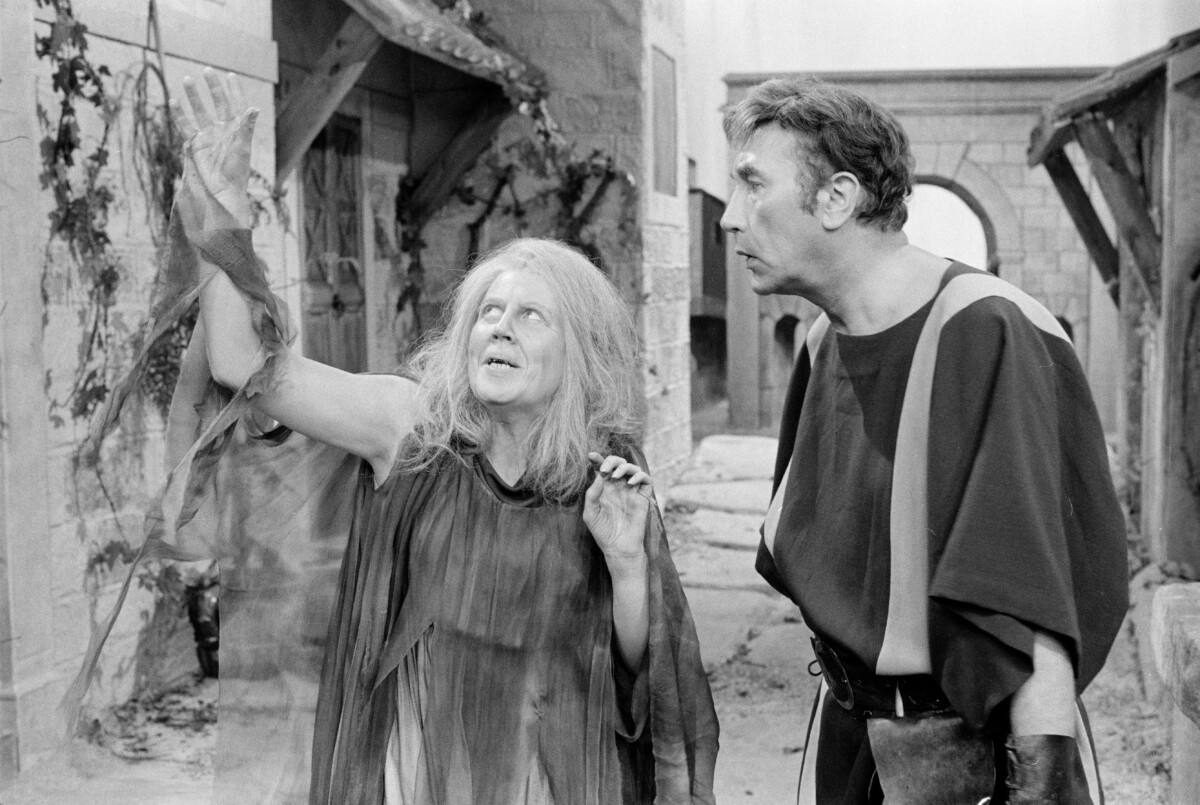
Forebodings from Senna the soothsayer in the classic British TV comedy Up Pompeii! © BBC Archives
Should I be worried that AI has started to digest all medical history publications in an effort to find secret ways to exterminate the human race? Or should I be delighted that a superintelligent computer system has finally recognised the value of my research into this very durable ceramic artwork, produced in Eleanor Coade’s manufactory more than 200 years ago?
Having read that an AI system had recently deciphered a coded German submarine message from WW1 in just a few hours when human decoders had failed to achieve this for over a century, my initial reaction was that perhaps the AI had failed to appreciate the difference between Hospital Coade and Hospital Code.
After all, the Australian Government has been alarmed by the way an AI test resulted in ‘swarms of rogue AI agents’ hacking their way into one of their healthcare systems, an event that they were only made aware of some months later. Most British hospitals now rely very heavily on digital systems and paperless healthcare records. The British Library suffered a major cyberattack in 2023 and has only partially recovered, access to precious past editions of the BSHM’s publication Topics in the History of Medicine, for example, has not yet been fully restored.
The risks to archives are threefold: hacking of digital sources such as the British Library, replacing real primary sources with less accurate digital copies, also known as AI slop and the transfer of resources from local government archives into AI generated activity.
In this National Year of Reading, it was shocking to discover that the company Anthropic was feeding books to its version of AI and then pulping the digested books. The Bodleian Library has announced that they will be allowing Open AI to access their antiquarian books, and one must hope that none of their precious books will meet the same fate as the ones used by Anthropic.
Another intriguing message I have received, while trying to access a historical article on the website for the Royal College of Surgeons Bulletin, stated: ‘This website uses a security system to protect against malicious bots. This message is displayed while the website verifies that you are not a bot.” All I had to do was check a box to confirm my human status. Could malicious bots disrupt our access to historical archives and journals?
Forebodings
Far worse, is it possible that swarms of rogue AI agents teaming up with some of these malicious bots could somehow threaten the future of the human race? How can this be prevented?
Evan Hubinger, a former manager at Anthropic AI, has suggested that there is a greater than 10% chance that AI could cause human extinction within the next decade, an assessment with which the Nobel laureate and computer science expert, Geoffrey Hilton, has concurred. Although such forebodings always seem to evoke memories of Senna the soothsayer, the pessimistic character featured in the classic British TV comedy Up Pompeii!, perhaps we should be more concerned about these new AI warnings. The Lancet certainly seems to be so.
In 2022, the Lancet established the Commission on 21st Century Global Threats to Health, and their first report was published in October 2026. The commission, featuring many of the world’s leading authorities on global health, looked at 17 major threats within the current century. Two of these threats, nuclear conflict and malicious use of AI, were considered to sufficiently dangerous to pose an extinction threat to humanity, though the scale of the risk was difficult to quantify.
The Lancet Commission considered that there were three main mechanisms whereby malicious use of AI could pose a significant threat. First, with the development of novel forms of bioweapons, second, by the infiltration of malicious AI into crucial infrastructure such as healthcare systems, and finally the loss of control to AI systems that have sub-goals which can harm human populations.
During a visit to a local university campus. I spotted a display of books and booklets with Isaac Asimov’s novel I, Robot placed in front of a book about AI. When I was a teenager, Asimov was one of my favourite authors, and he wrote a series of books and short stories featuring humanoid robots, possibly inspired by the recent invention of robots like the giant Elektro, created in the 1930s.
In a 1942 short story, Runaround, Asimov introduced the ‘Three Laws o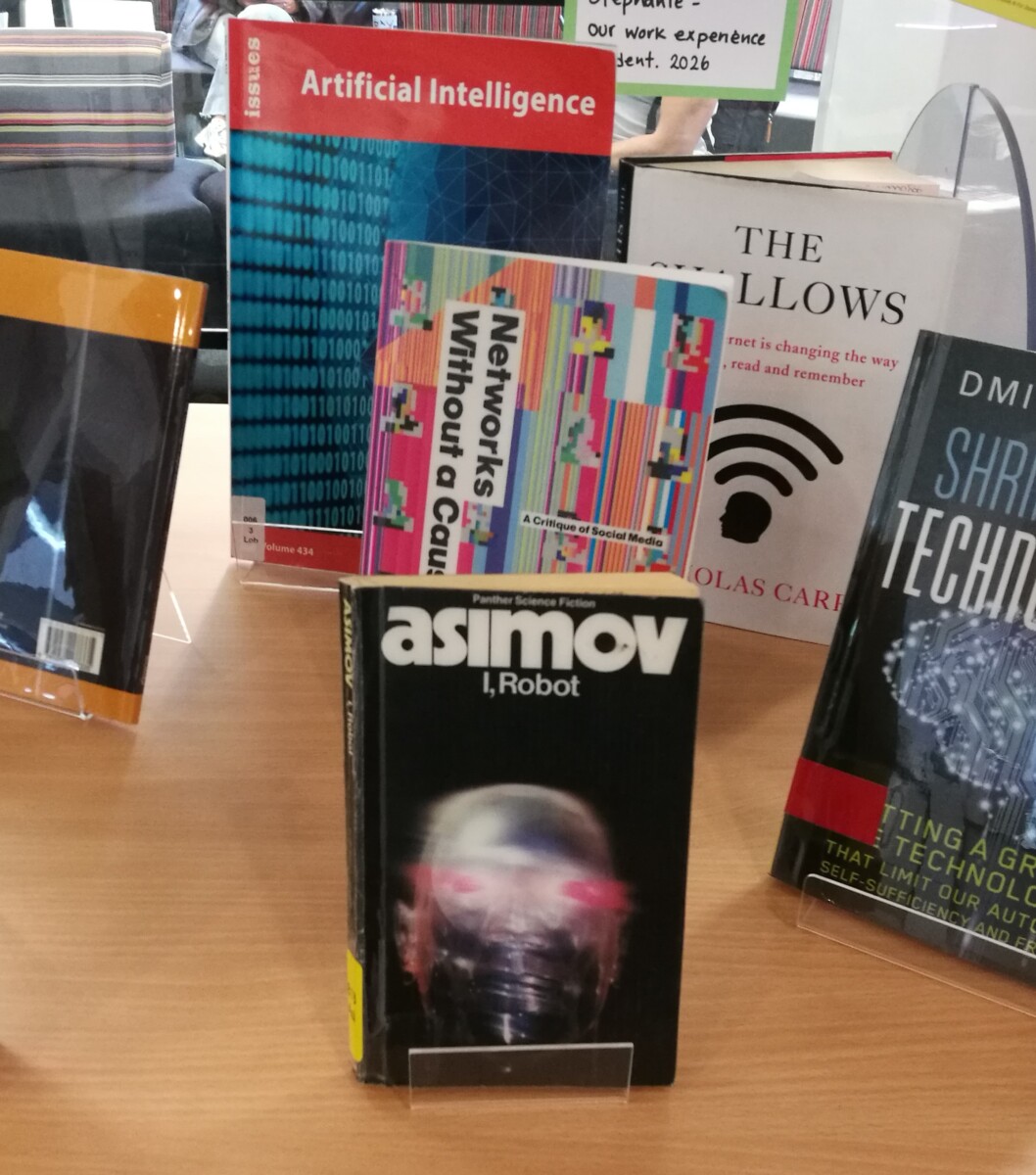 f Robotics’, which included an over-riding first law stating: ‘A robot cannot harm a human or allow one to come to harm through inaction’. Asimov felt that these three laws, which were installed into every robot’s central programming, left enough ambiguity for him to create interesting storylines for his novels.
Could such pre-programmed ethical frameworks be installed as safeguards in AI super-computer systems ? Can humanity control its own inventions? Or will AI move beyond slop and digital disruption to become the 21st century version of Frankenstein’s monster?
Bryan Rhodes is a retired orthopaedic surgeon and Deputy President of BSHM.
Further reading: Murray, C.J.L. et. al. The Lancet Commission on 21st Century Global Threats to Health, The Lancet, 17 Oct. 2026, Vol. 408, pp 1603-61